 New Year Special Discount Offer - Upto 20% Off on all Course Fees - 1 Seat Available
Data science or Data analytics: What Should You Learn First?
The short answer is that you should learn Data Analytics first, as it teaches you the fundamentals, including SQL, Python and data visualisation.This makes enrolling in a data analytics course in Kolkata an ideal starting point for beginners. Once you build a strong foundation, you can then advance to Data Science, where you will learn statistics, machine learning, and advanced modelling techniques through a professional data science course in Kolkata.
Even if you are a beginner, you may already be familiar with the tools you will use in data analytics, such as Excel, Tableau and Power BI. On the other hand, Data Science usually requires heavy coding skills in languages like Python or R from day one.
Both these fields are in high demand in 2026.
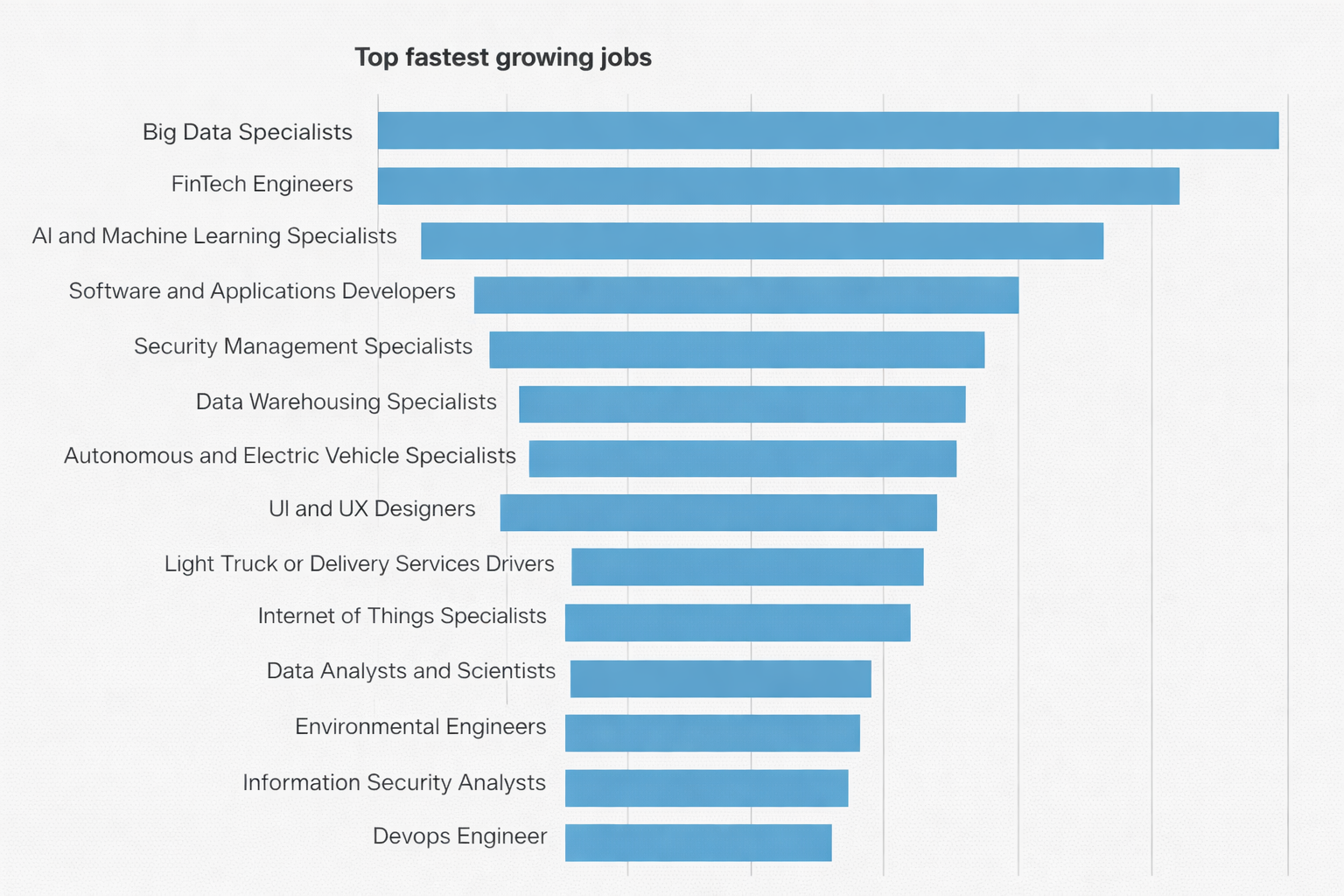
In fact, according to a recent report by the World Economic Forum (check the graph below), data analysts and data scientists rank among the most in-demand, high-paying jobs. So if you pursue either of these careers, you are essentially choosing a future-proof, long-term career.
In this article, you will learn all about data analysts and data scientists:
- differences between the roles
- what skills each require
- the career trajectory you can expect
- the average salary
- the training required for each role
What is Data Analysis?
Data Analysis is the work of collecting information, cleaning it, and then looking at it carefully so businesses can understand what happened and why it happened.
When data is haphazard, nobody can derive value from it. Data analysis clears the chaos and turns numbers into simple facts. You often use tools that help answer questions like: Did sales go up last month? Which city buys the most products? It involves understanding the present and the past using actual data.
A career in data analysis is about making sense of information in a way that any team, be it marketing, sales, operations etc. can understand and use.
What does a Data Analyst do?
A Data Analyst collects data from different places, makes it usable, and then looks for patterns that explain what happened.
As an analyst on a daily basis, you might:
- get raw data from systems like websites or sales records
- clean data so there are no mistakes or missing values
- sort the data to make it easy to understand
- create visuals like charts or graphs that show trends clearly
- share your findings with teams who will use them in decisions
Suppose you are given a list of daily sales of a store, and you analyse it to find which day sold the most. That’s basic data analysis, you are looking at real numbers to answer a real question.
Most analysts use tools that help them see patterns, not just numbers.
Is data analysis a good career for beginners?
Yes. Data analysis is easier for many beginners because it does not demand deep maths or programming right away.
You will find it easier to start here because:
- It uses tools that are widely taught and in demand (like SQL and Excel).
- You get to see results quickly, which keeps you motivated.
- You can learn the basics online without expensive degrees right away.
Instructors teach you step by step. Many people begin with simple tasks and grow into deeper insights.
What is Data Science?
Data Science is about using data and models (including machine learning) to predict what might happen in the future.
Instead of only describing what happened in the past, a data scientist builds systems that learn from data and make intelligent predictions. They typically use tools like Python, R, and machine learning algorithms in order to automate decisions and make forecasts at scale.
This job role is more technical. As a data scientist, you will be writing code, building models, and also testing how reliable your predictions are.
What does a data scientist do?
A Data Scientist works with large amounts of information to build systems that make predictions or automate patterns.
In practice, this means cleaning up messy data, choosing the right model, training it, and then checking if it makes accurate predictions. Some of the steps you’ll deal with include:
- preparing data so machine learning models can understand it
- selecting the right algorithm to solve the problem
- testing the model’s performance
- explaining results to business teams so they trust the prediction
You may have tasks like building a recommendation system that suggests what movie a user might like to watch next. The machine learns from past behaviour and finds patterns to suggest new content. That is how data science works.
Is data science harder than data analytics?
Yes, data science is generally harder because it requires stronger programming, maths, and statistical thinking.
You will spend more time learning concepts like algorithms and probability. You also write code that trains computers, you don’t stop at analysing data. That does not mean it’s impossible; it just means you will need to prepare more before you explore it further.
If you are the kind of person who enjoys exploring patterns and building systems that really do work by themselves, then this challenge can be exciting.
Data Analyst vs Data Scientist: What is the Difference Between These Job Roles?
Simply put, a Data Analyst focuses on understanding what happened in the past and present, using tools and straightforward analysis. On the other hand, a Data Scientist builds predictive systems that look at data and forecast future outcomes.
While both work with data, Analysts concentrate on explaining and visualising information, while Scientists are building systems that go beyond explanation to prediction and automation.
Skills Required for Data Analysts vs Data Scientists
Before choosing a path, you need to clearly understand what skills you will actually use day to day. Let’s check out some of them.
Must-Have Skills for Data Analysts
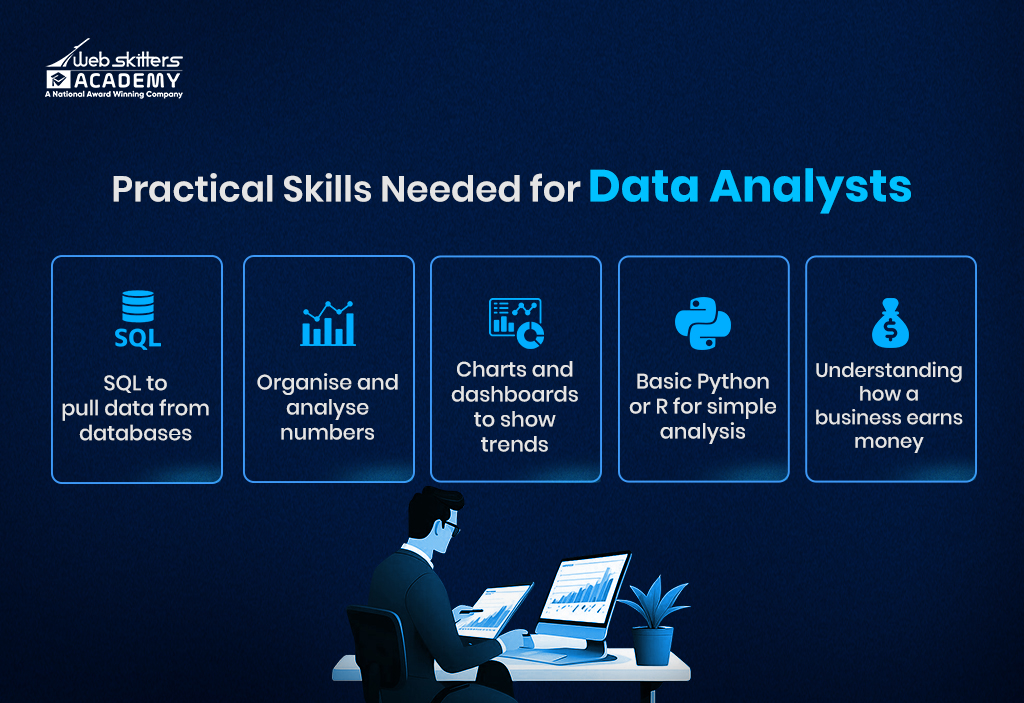
As a data analyst, you spend most of your time working with real business data and answering practical questions. The skills below support that work directly.
1. SQL (Structured Query Language)
SQL is the language used to get data from databases. You use SQL to ask questions like ‘show me all sales from last month’ or ‘list customers from a X city’.
The system returns only the data you asked for. Without SQL, you would rely on others to fetch data or spend hours sorting files manually, which so often leads to wrong conclusions.
2. Microsoft Excel
Excel is where many analysts first learn how data behaves. You use it to clean data, apply formulas, and compare values across rows and columns.
If numbers do not add up, Excel helps you spot the issue quickly. In many companies, Excel is still the fastest way to explore data before deeper analysis begins.
3. Data Visualisation
When you turn rows of numbers into a chart or dashboard, patterns become easier to see. A simple graph can show growth, decline, or sudden changes without long explanations.
This is because people make decisions faster when they can see the story clearly. When you have logical visuals, it saves time and prevents misunderstandings during team discussions.
4. Basic Python or R
Tools like R and Python help you automate tasks that repeat often. Instead of sorting the same type of data again and again, you write a small script that does it for you.
You might also use these tools to calculate trends or averages across large datasets. Usually, you would need to start small and build confidence as your work becomes more complex.
5. Understanding How the Business Works
Of course, numbers do not exist in isolation. Sales data, customer data, and operational data all mean different things.
But, when you understand how a business runs, you can interpret data more accurately. This helps you answer questions people actually care about. Because presenting figures without context won’t help anyone.
Skills Every Data Scientist Should Have
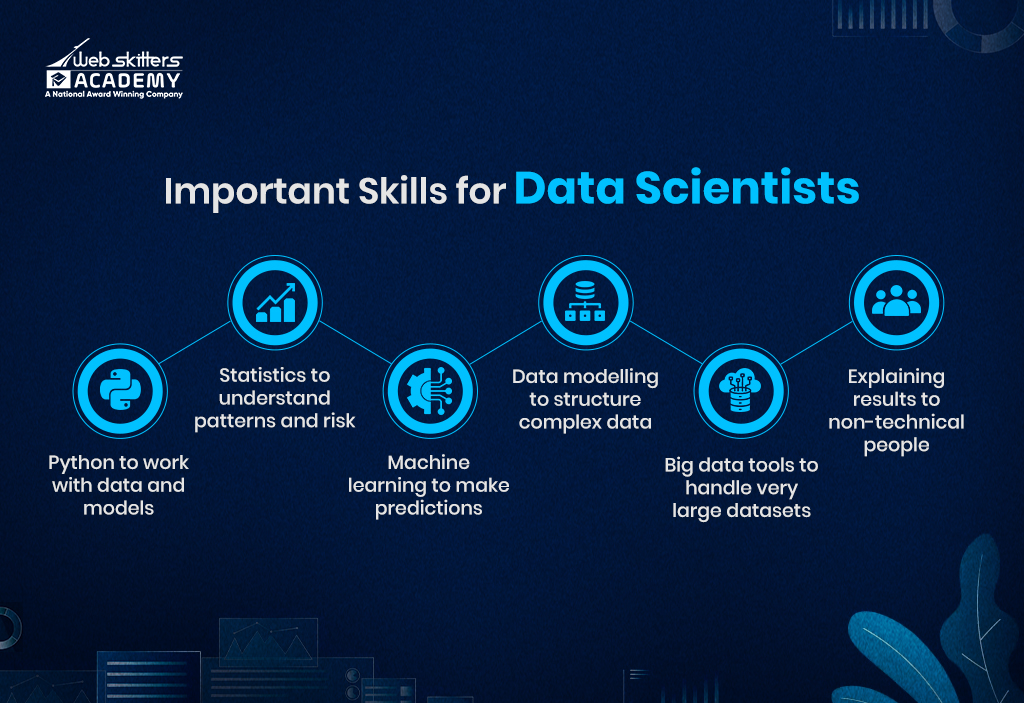
Data science asks you to go deeper into how data behaves and how systems learn from it. The skills here support prediction and automation.
1. Python Programming
Python is the main tool used to build data science workflows. You use it to prepare data, train models, and test results.
With this tool, you can work with very large datasets without long delays. Later, you advance to libraries that help machines recognise patterns and improve performance.
2. Statistics and Probability
This skill helps you understand whether results are meaningful or random. You use it to judge confidence in predictions and avoid false assumptions.
In case a model gives an unexpected result, statistics helps you understand why. Without this knowledge, predictions may look correct but fail in real-world use.
3. Machine Learning
Machine learning teaches systems to learn from data rather than follow fixed rules. You choose an approach, feed data into it, and observe how it improves.
You get to test different models just to see which one performs better. This process helps you build systems that adapt as new data comes in.
4. Data Modelling
Before any analysis works well, data must be structured properly. Data modelling is about organising information so it can be used efficiently. When data is poorly structured, models struggle.
When it is done properly, everything runs faster and gives more reliable results.
5. Working with Large Data Systems
As data grows, simple tools stop being enough. You need to use systems that process large volumes of data without crashing.
These tools help you analyse information that would otherwise be impossible to handle on a regular computer.
6. Explaining Results Clearly
Even the best model has no value if no one understands it. You need to learn how to explain outcomes in simple language so others can act on them. This skill helps teams trust your work and apply it in real decisions.
Salary Comparison: Data Analyst vs Data Scientist
You may be wondering, who earns more, a data analyst or a data scientist?
In India, both roles pay well compared to many other tech positions, but data scientists generally earn more because of the advanced skills and responsibilities involved.
According to multiple Indian salary surveys:
Data Analyst salaries in India
- Entry-level: ₹4–6 lakhs per year
- Mid-level: ₹7–10 lakhs per year
- Senior level: ₹12–15+ lakhs per year
Data Scientist salaries in India
- Entry-level: ₹6–9 lakhs per year
- Mid-level: ₹12–16 lakhs per year
- Senior level: ₹20+ lakhs per year
Glassdoor also reports data scientists earning around ₹15.5 lakh per year on average, with more experienced roles reaching higher levels.
So, while both paths pay well, data science generally comes with a higher average salary.
How much can a data analyst get paid?
An entry-level analyst in India may start around ₹4–6 lakh per year. With experience and growth into higher roles, this can move to ₹12–15 lakh or more in senior positions.
Pay varies by city and industry, but many fresh graduates find analyst salaries competitive right from the start.
How much is the salary of a data scientist?
A data scientist typically starts a bit higher, at around ₹6–9 lakh per year. With a few years of experience, salaries often rise to ₹12–16 lakh. According to research by TOI, in senior roles and specialised sectors (like AI teams), it can go above ₹20 lakh.
Large tech companies may pay even higher, all depending on the value of your work.
Education and Training Requirements
Education Requirements to Become a Data Analyst
To start your career as a data analyst, a Bachelor’s degree helps. Fields like mathematics, statistics, computer science, economics, or finance build strong foundations.
However, many people also enter analytics through short online courses with real projects. According to Nasscom, employers in India often value your ability to show what you can do over where you studied.
Minimum Requirements to Become a Data Scientist
Most data scientists in India hold at least a Bachelor’s degree, and many pursue a Master’s or specialised training. You will need deeper exposure to maths, algorithms, and modelling techniques. Real-world experience and project work also matter significantly.
Which Should You Learn First? Data Analytics or Data Science
Start with Data Analytics
If you are new to the world of data, starting with analytics is often easier and more practical. It gives real skills you can apply right away in jobs across industries.
You might choose analytics if you:
- want a quicker entry into the data world
- prefer understanding data before predicting it
- enjoy solving business problems with clear answers
- want to work with tools like Excel and SQL first
- want to see progress early in your learning journey
Start with Data Science
Some people are ready to jump straight into data science. You could choose this path if you:
- enjoy coding and building systems
- like solving complex logical problems
- are comfortable with maths and statistics
- aim for predictive modelling and automation roles
Career Trajectory: Data Analytics and Data Science
Both careers, Data Analytics and Data Science, grow with experience, but they evolve differently. This is based on the skills you build and the decisions you make.
Data Analytics Career Path
Most analysts start in roles like Junior Data Analyst or Reporting Analyst. With experience, you may move into a Data Analyst role and then become a Senior Data Analyst. From there, you could become a Business Intelligence Analyst or Analytics Manager. Experienced professionals can also pivot into roles like Data Scientist, Data Engineer, Analytics Lead, or even Chief Data Officer.
Here’s a simple flow:
Junior Analyst → Data Analyst → Senior Analyst → Analytics Lead → Analytics Manager → Chief Data Officer
Trajectory of a Data Scientist
If you begin in data science, you typically start as a Junior Data Scientist or Associate Scientist. After gaining experience, you can become a Data Scientist and proceed to being a Senior Data Scientist. After that, options include Lead Data Scientist, Machine Learning Specialist, or Head of Data Science.
Your path can look like this:
Junior Data Scientist → Data Scientist → Senior Data Scientist → Lead / AI Specialist → Head of Data Science
Wrapping Up
In the end, choosing between data analysis and data science will correlate with the way you think and work. Some people enjoy finding clear answers from existing data, while others like digging deeper and building models from scratch.
Neither path is better, but one will feel more natural to you over time. What matters is learning skills that actually help you do the work, not just pass interviews.
Are you planning on taking a course in data analysis or data science?
If yes, Webskitters Academy is a reputable institute that many students trust. You get structured training, hands-on projects, real tools, and guidance that prepares you for actual jobs.
Contact our expert councillors to get all the details.

Swarup Kr Saha

Swarup Kr Saha is a Senior Technical Analyst cum Corporate Trainer. He is seasoned and successful in creating fresher’s training programs for the IT aspirants and helping them excel in their careers. An enthusiast in IoT, he has more than 10 years of experience. He believes in a continuous learning procedure and is committed to providing Quality Training in the areas of ABCD (Application Development, Big Data, Cloud and Database). Using his exemplary skills, he also develops Full-Stack Web and Mobile (Android & iOS) App connecting IoT with REST-API based solutions.
Search
I Want to Learn...


Category
Explore OurAll CoursesTransform Your Dreams
into Reality
Subscribe to Our Newsletter
"*" indicates required fields